

Why September Allergies Strike Hard Indoors
As the September Colorado ragweed season peaks, many homeowners find themselves asking our team at Snow Maids: can a cleaning service help reduce fall allergy symptoms? The short answer is yes, but the reasons why go far beyond basic aesthetics. Early fall brings crisp air and beautiful foliage, but it also ushers in one of the most challenging times of the year for respiratory health. Dry autumn winds act as a delivery mechanism, driving massive amounts of outdoor pollen directly into your living spaces. Once inside, these microscopic irritants become trapped.
According to the Environmental Protection Agency, indoor air can be two to five times more polluted than outdoor air, especially when windows are tightly shut against the autumn chill. This creates a compounding problem for allergy sufferers. You might be taking daily over-the-counter medications and doing basic dusting, but if you are not physically removing the particulate matter from your environment, you are only treating the symptoms while ignoring the root cause.
This is where the decision point becomes clear for homeowners. Relying on standard surface dusting often makes the problem worse by launching settled pollen back into the breathing zone. True relief requires targeted extraction. By investing in professional house cleaning services, you shift from simply moving dirt around to actively removing environmental triggers. Furthermore, combining rigorous extraction with eco-friendly cleaning options ensures that you are safely removing irritants without adding harsh, lung-irritating chemicals back into your home's air supply.
The Science of Indoor Air Quality During Autumn
Understanding why your symptoms flare up requires a closer look at the environmental realities of autumn. We often associate severe allergies with spring blossoms, but fall presents a unique and highly aggressive set of respiratory triggers. A single ragweed plant can produce up to one billion pollen grains in a single season. These grains are incredibly lightweight and designed by nature to travel for hundreds of miles on the breeze.
These microscopic particles infiltrate your home through multiple avenues. They are pulled in through your HVAC system's fresh air intakes, sweep through open doors in a matter of seconds, and hitch a ride on your clothing, shoes, and pets. Once inside, the specific climate conditions of the season dictate how these allergens behave.
How Dry Winds Drive Pollen Indoors
Colorado's dry, windy autumn climate plays a massive role in indoor air degradation. In the spring, heavy pollen is often weighed down by frequent rain showers and higher humidity, which causes it to drop to the ground quickly. In stark contrast, the lack of humidity in early fall prevents moisture from weighing down ragweed pollen. This allows the particulate matter to easily blow indoors and stay suspended in the air for significantly longer periods.
Because the air is so dry, these particles eventually settle deep into the horizontal surfaces and porous materials of your home. The settling rate is slow, meaning that for hours after a window is closed, invisible allergens are still drifting down onto your tables, floors, and upholstery. Worse still, typical household activities—like walking across a rug, sitting on a sofa, or turning on a ceiling fan—inadvertently stir these settled particles right back up into your breathing zone.
| Environmental Factor | Spring Pollen Behavior | Fall Ragweed Behavior (Dry Climate) |
|---|---|---|
| Moisture Level | High humidity weighs particles down. | Low humidity keeps particles lightweight. |
| Suspension Time | Drops to surfaces relatively quickly. | Stays airborne for extended periods. |
| Indoor Penetration | Moderate; often washed away by rain. | Severe; easily driven by dry autumn winds. |
| Re-suspension Risk | Lower; tends to clump together. | Extremely high; easily disturbed by movement. |
The Difference Between Moving Dust and Extracting Allergens
One of the most common mistakes homeowners make during the September Colorado ragweed season is attempting to combat heavy indoor allergens with standard cleaning tools. There is a massive operational difference between moving dust around and actually extracting it from the building envelope.
The feather duster effect: Traditional dry dusting tools, like feather dusters or dry cotton rags, do not capture microscopic particles. Instead, they simply agitate settled ragweed pollen and dust mites, launching them directly back into the indoor air. You might achieve a surface that looks clean to the naked eye, but the invisible allergens have merely been relocated to your lungs.
The standard vacuum problem: Similarly, standard household vacuums without sealed HEPA (High-Efficiency Particulate Air) filtration systems are often detrimental to indoor air quality. While they pick up visible crumbs and pet hair, their exhaust ports act as pollen cannons, shooting microscopic allergens right back into the room. If you have ever noticed a dusty smell while vacuuming, you are actively inhaling recirculated particulate matter.
Professional allergen extraction relies on a completely different methodology. In our experience cleaning homes throughout Castle Rock, true extraction requires professional damp-wiping techniques that physically trap and remove particulate matter from the environment. Our technicians use specialized equipment designed to capture and hold microscopic triggers rather than exhausting them. When evaluating cleaning service quality, we always advise clients to ask about specific equipment, filtration standards, and extraction protocols. A team that uses sealed HEPA vacuums and damp-wiping methodologies will actively lower the allergen load in your home, providing measurable relief.


How Color-Coded Microfiber Traps Ragweed Pollen
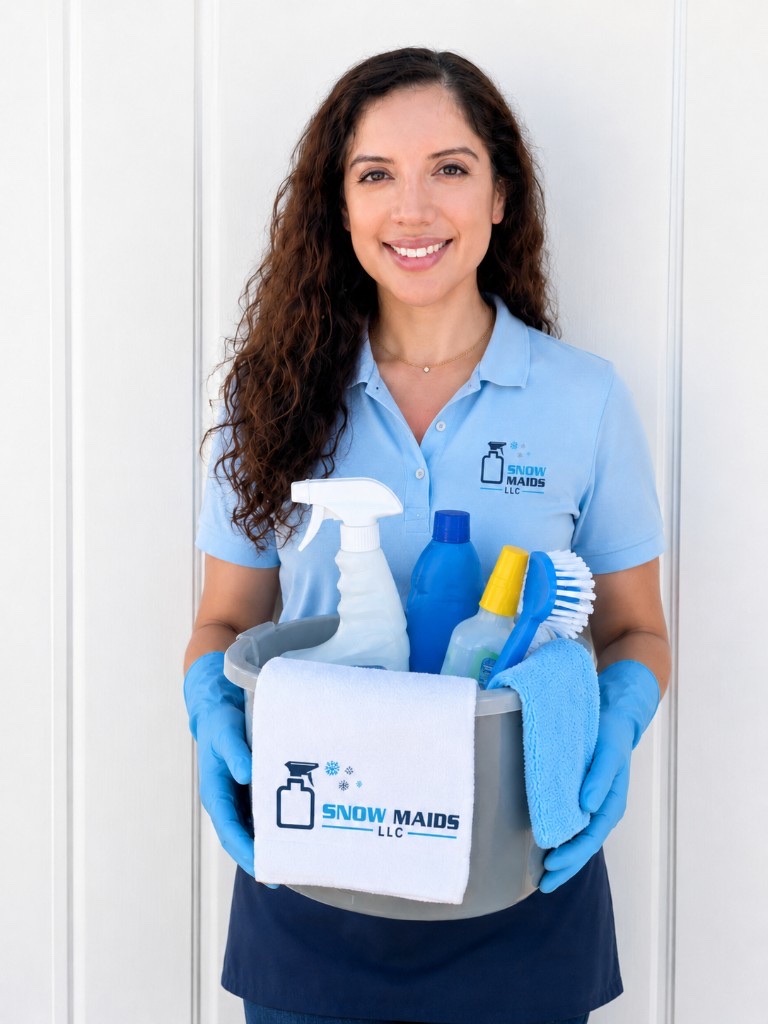
To truly understand how a professional cleaning service combats fall allergies in Castle Rock CO, you have to look at the materials our Snow Maids technicians use in the field. The cornerstone of our professional-grade eco-friendly cleaning methods is the use of specialized microfiber cloths. Unlike traditional cotton rags or paper towels, which merely push dirt and pollen across a surface, microfiber is scientifically engineered for extraction.
The physical structure of microfiber: A single strand of high-quality microfiber is split during the manufacturing process, creating a microscopic asterisk shape. This structure creates millions of tiny crevices that act as nets. When rubbed across a surface, microfiber generates a slight static charge. This charge acts like a magnet, attracting and holding onto microscopic dust mites, pet dander, and ragweed pollen grains until the cloth is washed in hot water.
The necessity of color-coding: Capturing the allergens is only half the battle; preventing cross-contamination is equally vital. Professional teams utilize strict color-coded microfiber systems to ensure that allergens and bacteria are never transferred from one zone of the house to another. For example, a red cloth used to sanitize a bathroom will never be used to wipe down the baseboards in your living room. A blue cloth used for glass will never touch a kitchen counter. This meticulous methodology ensures that pollen captured in an entryway isn't accidentally spread to your bedroom nightstand.
| Feature | Traditional Cotton Rags | Professional Microfiber |
|---|---|---|
| Fiber Structure | Smooth, rounded fibers. | Split, asterisk-shaped fibers. |
| Action on Surfaces | Pushes dirt and pollen around. | Traps and holds microscopic particles. |
| Static Charge | None. | Generates a magnetic static charge. |
| Cross-Contamination | High risk if not color-coded. | Eliminated through strict color-coding. |
This scientific approach to surface cleaning directly results in noticeably cleaner, more breathable indoor air. By physically trapping the allergens rather than agitating them, the overall particulate load in your home drops significantly, offering genuine relief to your respiratory system.
Targeting the Hidden Allergen Traps in Your Home
During the September Colorado ragweed season, pollen doesn't just sit on your kitchen counters or dining tables. It seeks out the porous materials and forgotten corners of your living space. To effectively reduce allergy symptoms, a cleaning strategy must target these hidden reservoirs where dust mites and pollen grains accumulate most heavily.
Textiles and Upholstery
Your home's textiles act as massive, room-sized allergen nets. Heavy drapes, plush carpets, area rugs, and upholstered furniture naturally catch and hold airborne particles as they settle. Every time you sit on a couch or walk across a carpet, a microscopic cloud of trapped ragweed and dust mites is puffed back into the air. Standard vacuuming barely scratches the surface of these reservoirs. True extraction requires rigorous HEPA vacuuming with specialized upholstery attachments designed to pull particulate matter from deep within the fibers.
Baseboards and Blinds
While homeowners frequently wipe down their main countertops, horizontal architectural features are often overlooked. Ceiling fan blades, window blinds, door frames, and baseboards are prime real estate for dry dust collection. When a ceiling fan is turned on after weeks of inactivity, it instantly disperses a thick layer of accumulated allergens throughout the room. Professional damp-wiping techniques are required to safely capture this dust without letting it go airborne.
This is precisely why scheduling a seasonal deep house cleaning is so necessary. It acts as a hard reset for your home's baseline air quality before winter forces you to keep the windows closed permanently. One homeowner reached out to our Snow Maids team for a comprehensive deep cleaning last fall when seasonal allergies were heavily impacting their family. After our technicians provided a thorough service focused on these exact hidden traps, the family noted that the house looked better than ever before—and more importantly, the indoor air felt noticeably clearer and easier to breathe.
Protecting Respiratory Health with Non-Toxic Methods
When you are suffering from fall allergies, your respiratory system is already highly inflamed and sensitive. The last thing your lungs need is the introduction of harsh chemical irritants. Unfortunately, this is exactly what happens when traditional, heavy-duty cleaning chemicals are used in a poorly ventilated home.
Traditional cleaning products often rely on bleach, ammonia, and artificial synthetic fragrances. These products release Volatile Organic Compounds (VOCs) into the air as they dry. VOCs are noxious gases that can mimic, trigger, or severely worsen existing allergy and asthma symptoms. For someone already struggling with ragweed pollen in Castle Rock CO, breathing in chemical fumes can cause coughing, wheezing, watery eyes, and headaches, effectively canceling out the benefits of having a clean house.
The plant-based advantage: This highlights the immense value of non-toxic, plant-based cleaning solutions. High-quality eco-friendly products are formulated to effectively break down grease, grime, and dirt without leaving behind irritating chemical residues or noxious fumes. They rely on natural enzymes and biodegradable ingredients to achieve a deep clean that respects your indoor air quality.
Another Castle Rock CO homeowner with a highly demanding schedule booked a thorough cleaning with our team last fall to keep up with the daily grind. Our Snow Maids technician arrived punctually and delivered astonishing attention to detail using safe, non-toxic solutions. The outcome was a spotless home that felt genuinely clean and airy, rather than smelling like an industrial chemical spill. Connecting eco-friendly practices to this feeling of true cleanliness provides peace of mind. You get the meticulous attention to detail required to extract allergens, without compromising your respiratory health with artificial fragrances.
Frequently Asked Questions About Indoor Air Quality and Cleaning
Does a clean house help with allergies?
Yes, physically removing allergens from surfaces directly reduces the particulate load in the air, which significantly reduces triggers for congestion and sneezing. When pollen, pet dander, and dust mites are extracted from your floors and furniture, there is simply less irritant available to become airborne and enter your respiratory system. Consistent, thorough cleaning is one of the most effective ways to manage indoor allergy symptoms.
How do you get rid of pollen in the house?
Keep windows closed during peak season, and use HEPA vacuums alongside damp microfiber cloths to extract pollen rather than sweeping it. Dry sweeping or using feather dusters will only launch the pollen back into the air. Additionally, regularly changing your HVAC filters and wiping down your pets when they come inside will prevent new pollen from settling into your carpets and upholstery.
Can dust make allergies worse in the fall?
Yes, dust mites thrive in textiles, and combined with ragweed pollen, they create a severe dual-trigger for allergy sufferers. During the September Colorado ragweed season, the combination of outdoor pollen blowing inside and existing indoor dust mites can overwhelm your immune system. Removing the dust physically removes the habitat where these microscopic mites live and breed.
Why are my indoor allergies worse in September?
September is the absolute peak of ragweed season, and dry conditions allow massive amounts of pollen to infiltrate the home. Unlike spring pollen, which is often weighed down by rain, fall pollen is incredibly dry and lightweight. It easily rides the autumn winds straight through open doors and fresh air intakes, settling deep into your home's hidden crevices.
Will standard vacuuming remove ragweed pollen?
No, standard vacuums often lack the filtration necessary to trap microscopic pollen, frequently exhausting it back into the room. A vacuum must have a sealed HEPA filter to effectively capture particles as small as ragweed pollen (which can be just a few microns in size). Without this level of filtration, you are simply vacuuming up dirt while spraying invisible allergens back into your breathing zone.
Breathe Easier This Fall with Professional Support
Managing indoor air quality during the height of allergy season doesn't have to be a losing battle. At Snow Maids, we've seen firsthand how clear, expert allergen extraction provides tangible, measurable relief from seasonal symptoms. By moving away from standard dry dusting and embracing scientific cleaning methodologies, you can transform your home back into a safe haven.
Remember that true indoor air quality improvements require the right tools. Standard vacuums and cotton rags simply push the problem around. It takes sealed HEPA filtration, color-coded microfiber technology, and non-toxic, plant-based cleaning solutions to physically remove triggers without irritating your lungs further. If you are struggling with poor indoor air quality in Castle Rock CO this season, don't wait for the first winter freeze to find relief. Schedule a professional deep clean to extract those hidden allergens, prepare your home for the months ahead, and finally breathe easier.